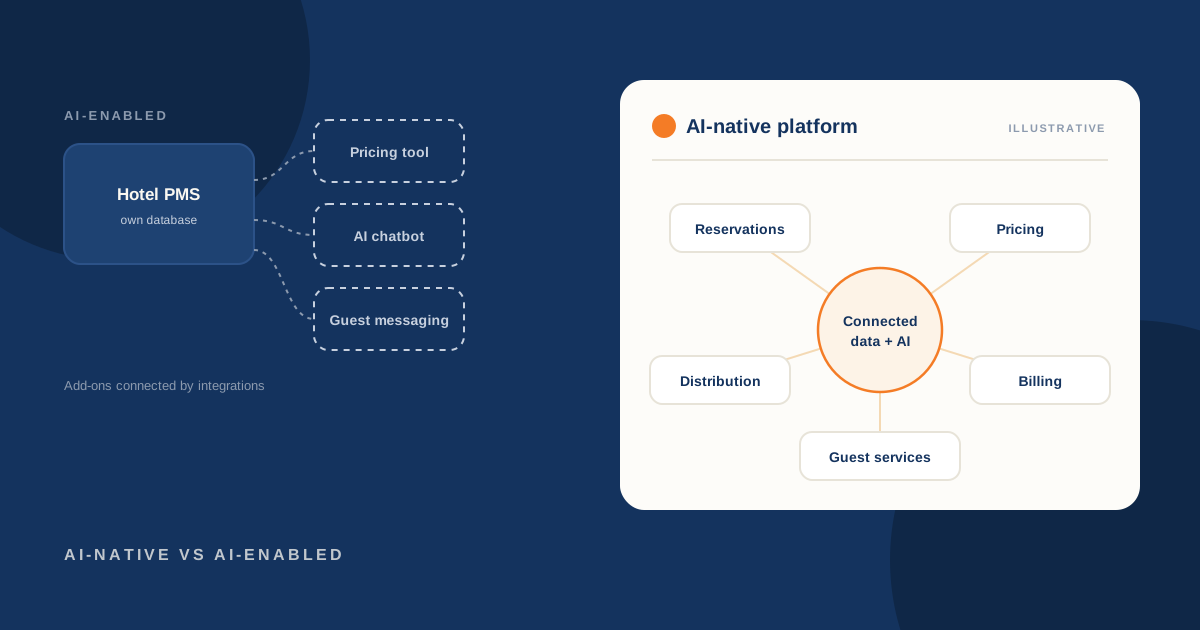
AI has quickly become one of the most common words in hospitality software marketing. Property management systems, channel managers, pricing tools and guest messaging platforms now almost all promise some form of AI. But not every platform that advertises AI was designed with AI at its core, and for a hotel choosing its next system, that difference is worth understanding before signing a contract.
The question of AI-native vs AI-enabled hotel software is not about labels. It is about whether AI sits inside the workflows a hotel team uses every day, working from the same reservation, room, rate and guest data, or whether it lives in separate tools that need to be connected, synchronised and checked. That affects how much time staff spend switching screens, how quickly pricing responds to demand, how consistent distribution stays, and how connected the guest experience feels.
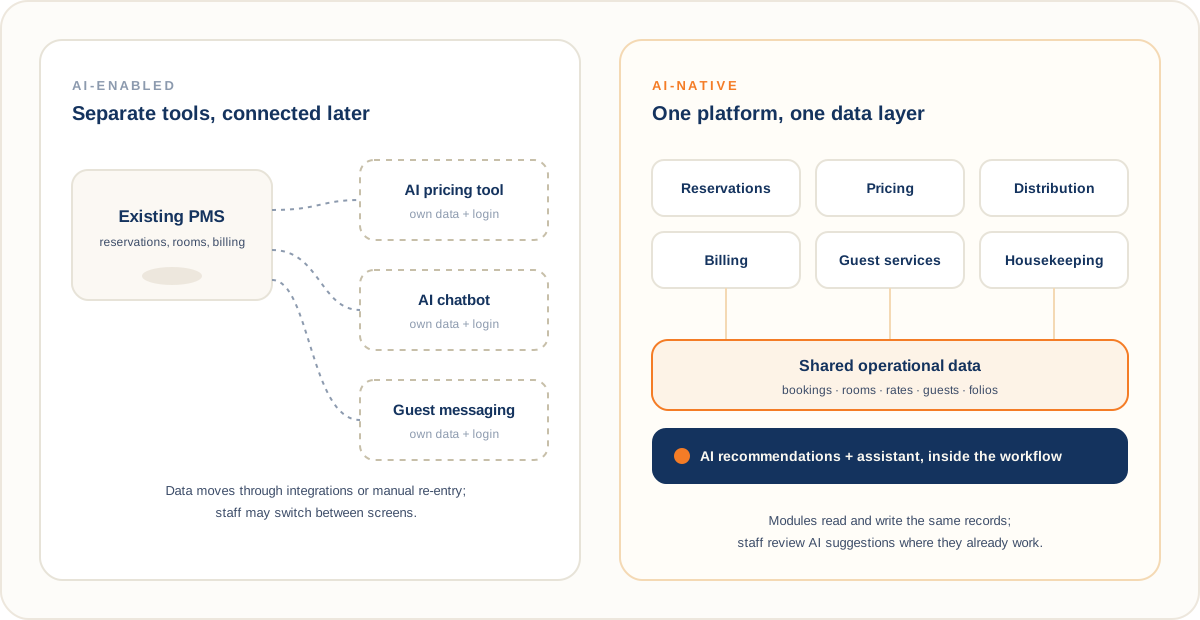
AI-enabled hotel software adds AI capabilities to an existing platform, while AI-native hotel software is designed around AI and connected data as part of its underlying architecture. The practical difference depends on how deeply AI is integrated into the system, how its modules share data, and how effectively it supports real hotel workflows.
What Is AI-Enabled Hotel Software?
AI-enabled hotel software is traditional hotel software, usually a PMS or related system, that has had AI features added after the core product was built. The original platform was designed for recording reservations, managing rooms and producing invoices; AI arrives later as a new module, an integration with a third-party tool, or a paid add-on.
Common examples include:
- An AI chatbot added to an existing PMS or hotel website to answer guest questions.
- An external AI pricing tool connected to the hotel system through an integration.
- A separate guest messaging platform with AI-generated replies, linked to reservations by an interface.
- An AI reporting or forecasting tool that imports data exported from the PMS.
In this model, the AI tool may depend on its own database, its own interface and its own login, with data passed between systems by integrations or, in some cases, manual export and re-entry.
Benefits and limitations
AI-enabled software can deliver real value. A hotel can add a specific capability, such as automated pricing suggestions or a guest chatbot, without replacing systems its team already knows. Specialist tools are often strong at the one job they do, and a well-built integration can work reliably for years.
The limitations tend to show up at the joints. When AI lives in a separate tool, its recommendations are only as current as the data it receives; staff may need to move between screens to act on them; and each additional tool brings its own setup, cost, and support relationship. Not every AI-enabled platform has these limitations to the same degree, which is why the integration quality matters as much as the AI feature itself.
What Is AI-Native Hotel Management Software?
AI-native hotel management software is designed with AI as part of the platform from the start, rather than added afterwards. The difference shows up at two levels: how the system is built, and how the hotel team experiences it day to day.
- AI considered in the original design. The data model and workflows were planned with AI-assisted decisions in mind, not retrofitted around them.
- Connected data. Reservations, room inventory, billing, pricing, distribution and guest interactions draw on shared records where the platform supports them, instead of being copied between systems.
- AI inside existing workflows. Recommendations and assistance appear where staff already work, such as the rate calendar, the front desk screen, or a guest request queue.
- Less duplicate entry. When the platform is genuinely unified, the team relies less on disconnected tools and repeated data entry.
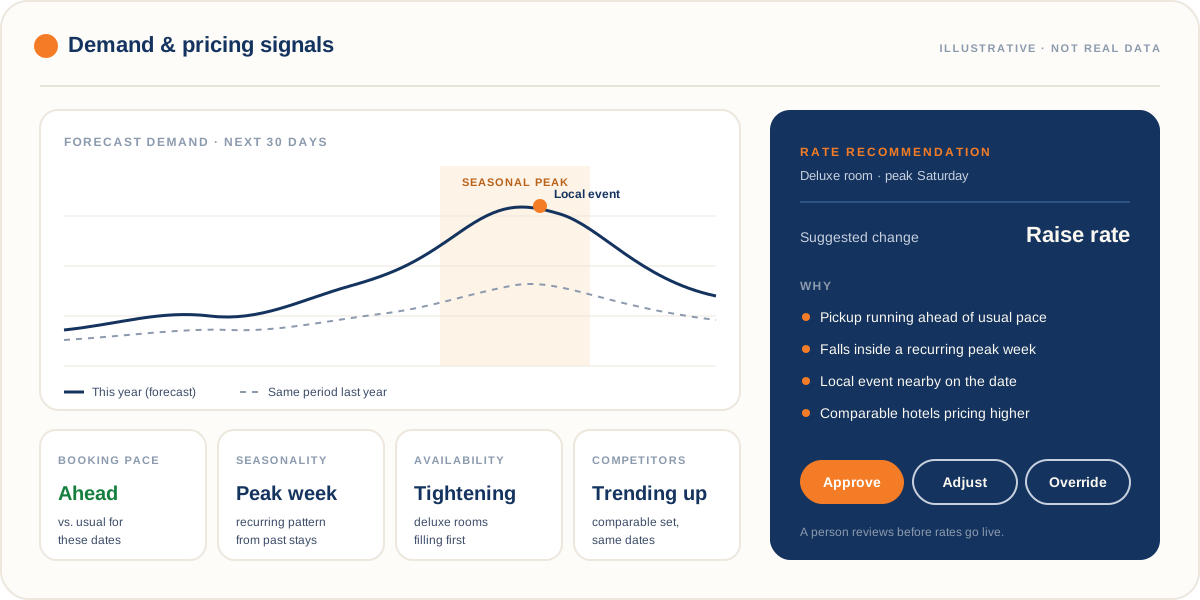
- Explainable recommendations with human oversight. Staff can see why a recommendation was made, and review, approve or override it.
- More connected decisions. Because pricing, availability and guest data sit together, decisions in one area can take the others into account.
The label “AI-native” alone does not guarantee better performance. Implementation quality, data accuracy, security, integrations and the platform’s actual capabilities still determine whether a hotel sees real value.
AI-Native vs AI-Enabled: Key Differences for Hotels
The table below summarises how the two approaches typically differ. These are general tendencies, not universal guarantees: real-world capabilities vary by vendor and product, and a well-integrated AI-enabled stack can outperform a poorly implemented platform that calls itself AI-native.
| Comparison area | AI-enabled software | AI-native software |
|---|---|---|
| Platform design | AI added to an existing system | AI considered in the core architecture |
| Data connectivity | May rely on separate modules or integrations | Designed to support connected data and workflows |
| Hotel operations | AI may operate alongside existing processes | AI can be integrated directly into operational workflows |
| Revenue management | May use a separate pricing tool | Pricing intelligence can be part of the core platform |
| Staff assistance | May require a separate AI assistant | AI assistance can be embedded in the PMS |
| Guest experience | AI guest tools may be separately integrated | Guest-facing intelligence can connect with hotel workflows |
| Automation | Depends on integrations and available capabilities | Designed to support connected automation |
| Decision-making | Depends on available data and tool connectivity | Can use connected operational data when appropriately implemented |
| Implementation | May require configuring additional tools | May offer a more unified experience, depending on the platform |
| Evaluation criteria | Assess the added AI features and integrations | Assess the architecture, data flow, governance, and actual AI capabilities |
Why Does the Difference Matter for Hotel Operations?
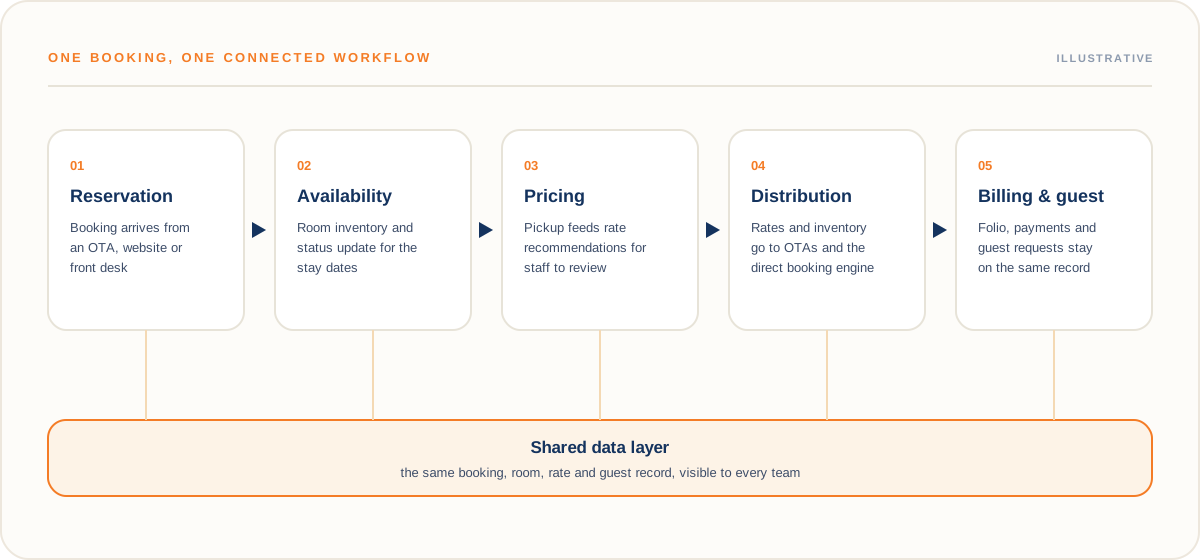
Architecture can sound abstract, but it shows up in ordinary moments of a hotel day. Here is where the difference between an AI-native hotel management system and an AI-enabled one tends to be felt most.
Front Desk and Daily Operations
Front-desk teams need an accurate view of reservations and room status at every moment: who is arriving, which rooms are clean and ready, and which guests have special requests. When that information is spread across systems, staff spend time cross-checking rather than looking after guests. An AI assistant embedded in the PMS can help with routine questions, such as how to process a room move or apply a policy, and connected room status reduces repetitive manual updates between front office and housekeeping.
Revenue Management and Room Pricing
Good rate recommendations depend on good inputs: current bookings and pickup, demand signals, seasonality, room availability and competitor information. When pricing intelligence works from the same live booking and inventory data as the rest of the platform, recommendations can reflect what is actually happening at the property. As we explain in how AI pricing works for hotels, those recommendations should still be governed: a revenue manager reviews them, sets boundaries, and can override them when local knowledge says otherwise.
OTA Distribution and Direct Bookings
Hotels need consistent rates, availability and reservation information across OTAs and their own direct booking engine. Inconsistencies can lead to overbookings, rate-parity issues, or rooms left unsold on one channel while another shows them as available. A platform where the channel manager, booking engine and reservations share one calendar makes consistency easier to maintain. AI does not, on its own, guarantee synchronisation: that still depends on reliable channel connections, correct room and rate mapping, and monitoring.
Guest Experience and Personalisation
When guest preferences, stay history and in-stay requests are connected to the reservation, teams can respond in a more timely and relevant way, such as having a requested extra pillow ready or recognising a returning guest. Digital services like mobile check-in and an AI concierge can handle common questions at any hour. The aim is to give staff better context and more time for the personal moments, not to remove the human touch that defines good hospitality.
Reporting and Decision-Making
Fragmented systems usually mean fragmented reporting: occupancy in one place, revenue in another, channel performance in a third, all exported and stitched together in a spreadsheet. When operational and commercial data is connected, managers can understand performance from one source, compare channels and room types, and spot problems earlier. The quality of those reports still depends on the quality of the data going in.
Practical Examples: AI-Enabled vs AI-Native in a Hotel
The scenarios below are illustrative examples of how workflows can differ. They are not measured performance results, and the outcome in any real hotel depends on the specific products and how they are set up.
Reviewing a rate recommendation
The revenue manager opens a separate AI pricing application, checks its suggested rate, then switches to the PMS or channel manager to confirm current availability and update the rate.
The same recommendation appears inside the hotel platform next to current bookings and availability, and once approved, flows into rate plans without being re-keyed.
What it needs to work: The pricing logic needs accurate inventory and booking data, and the hotel still needs clear rules for who can approve or override a rate.
Answering a guest question at the front desk
A guest asks about a late checkout. The front-desk employee checks the reservation in the PMS, the housekeeping schedule in another tool, and perhaps asks a standalone chatbot for the policy.
The employee asks an assistant inside the PMS, which can draw on the reservation, room status and hotel policy in one place, then confirms the answer before replying.
What it needs to work: Policies and room status must be kept up to date in the system, and staff should verify the assistant’s answer before committing to the guest.
Tracking bookings across channels
Bookings from OTAs, the hotel website and walk-ins land in different places and are reconciled into the PMS, sometimes by hand, before the team has a full picture.
Reservations from each channel appear on one calendar with room availability, so the team works from a single, current view of what is sold and what is open.
What it needs to work: Channel connections must be configured correctly and monitored; no platform can fully prevent issues if an OTA connection fails or mappings are wrong.
Handling a guest request during the stay
A guest sends a request through a separate messaging tool. Someone has to notice it, copy it into the right system, and tell the relevant department.
The request is attached to the guest’s stay and made visible to the relevant team, such as housekeeping or front office, so it can be tracked to completion.
What it needs to work: Teams need clear ownership of each request type, and someone still has to respond with the right tone and judgement.
How to Identify Truly AI-Native Hotel Software
Whether you are comparing a shortlist of hotel PMS platforms or reviewing a single vendor, these questions help separate genuine architecture from marketing language.
- 01Was AI considered in the original platform architecture, or added later?
- 02Do reservations, pricing, guest information and operations share connected data?
- 03Can AI recommendations explain why they were generated?
- 04Can staff review, approve or override recommendations where appropriate?
- 05Does the platform reduce duplicate entry and unnecessary tool switching?
- 06What integrations are available, and how is data synchronised?
- 07How are guest data, access permissions, privacy and security handled?
- 08Can the vendor demonstrate these capabilities using realistic hotel workflows?
- 09What happens when data is incomplete or an integration is unavailable?
- 10How are implementation, onboarding, support and ongoing costs handled?
Buyer takeaway: evaluate the actual architecture and demonstrated workflows, not just the AI label in the marketing material. Ask to see your own day-to-day scenarios run live in the product.
How PrimeGuest Approaches AI-Native Hotel Management
PrimeGuest is one example of an AI-native hotel management platform, built for modern Indian hospitality. Rather than treating AI as an isolated feature, the PrimeGuest platform is designed to bring hotel operations and AI-driven capabilities together in one connected system, so pricing recommendations, staff assistance and guest services sit alongside reservations, channels and billing.
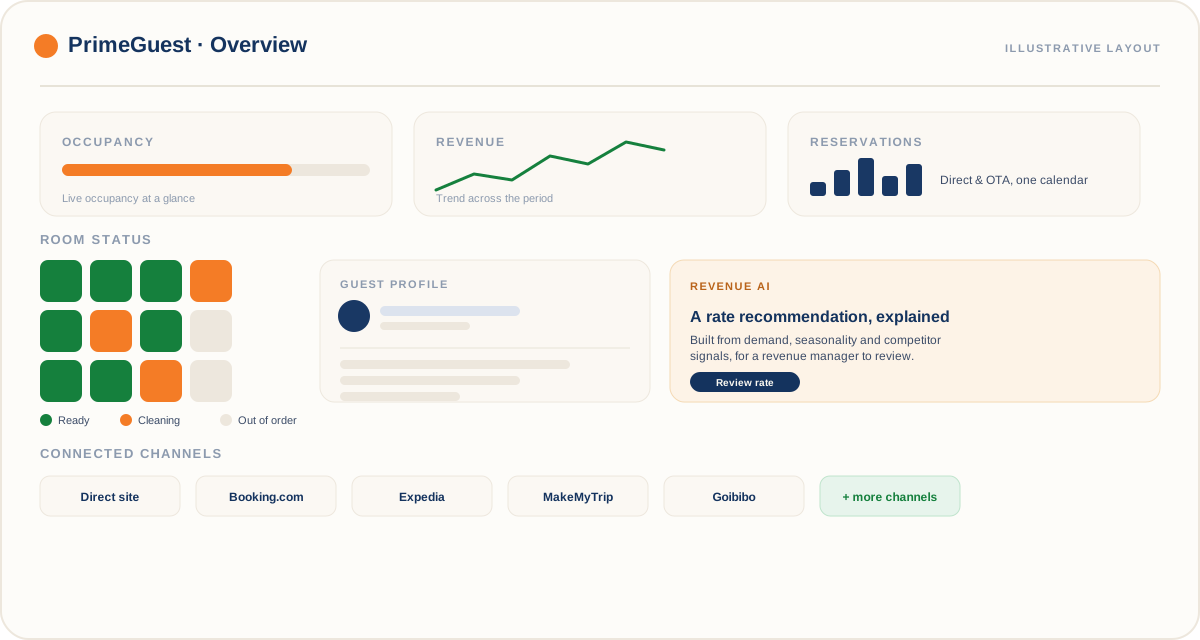
Reservations, front desk, housekeeping and connected operational information in the PrimeGuest PMS.
Demand-informed pricing recommendations using signals such as seasonality, availability and competition data, with the reasoning shown alongside each one.
Plain-language assistance for hotel teams, so staff can ask how to do something and get the steps in context.
A guest app for digital check-in, guest requests and payments, with an AI concierge for common guest questions.
OTA channel management and a direct booking engine working from the same calendar.
Billing and payments designed around Indian hotel requirements, including GST invoices and UPI.
For Indian properties, billing is a good example of why connected data matters: a GST invoice is only as accurate as the booking and folio behind it. Our guide to GST billing rules for hotels in India covers what a compliant hotel invoice needs.
Available modules and features can vary by plan. Talk to the PrimeGuest team to confirm what is included for your property.
Is AI-Native Always Better Than AI-Enabled?
Not always. The right choice depends on a hotel’s size, existing technology, workflows, budget, integrations and business objectives. An AI-enabled tool may be the sensible option when a hotel needs one specific capability, such as a guest chatbot, and is otherwise happy with its current systems. An AI-native platform may be worth evaluating when a hotel wants connected intelligence across several core workflows, such as reservations, pricing, distribution, billing and guest services, or is already planning to replace its PMS.
Either way, hoteliers should prioritise demonstrable value, ease of use, data reliability, transparency, security and fit for their property over the label on the product page. When comparing AI-native vs AI-enabled hotel software, the best question is simple: does this system make my team’s real work easier and my decisions better informed?

See connected hotel operations and AI working together in PrimeGuest.
You May Also Like
How AI reads demand, seasonality and competitor rates to recommend smarter room rates.
Read more →Leading hotel PMS platforms compared on cloud, AI, integrations and India/GST relevance.
Read more →Applicable tax rates, compliant invoices, and how a hotel PMS keeps every invoice accurate.
Read more →Frequently Asked Questions
Simplify Hotel Operations with PrimeGuest PMS
PrimeGuest PMS brings reservations, guests, billing, operations and integrations onto one platform, so hotels run on live data instead of spreadsheets stitched together at month-end.
- AI-native PMS
- Cloud-based hotel management
- Hotel booking management
- GST billing
- Hotel PMS integrations
- Automated workflows
- Real-time visibility